When Should You Discount Stock?
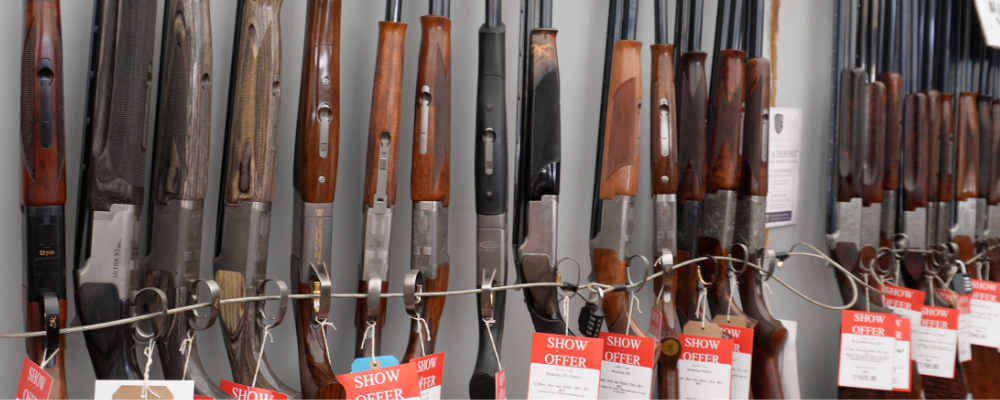
The Game Fair has just finished, the Glorious Twelfth is approaching and customers are beginning to think seriously about the season ahead. For gun shops, this is one of those points in the year when discounting can feel like the obvious thing to do.
Perhaps you ran show-only offers that you are considering extending, stocked up before the event and brought more home than expected, or are seeing other dealers’ promotions and wondering whether you need to respond.
Discounts can get stock moving, but only when they are used for the right reason. Reduce something too quickly and you give away margin on an item that might have sold anyway. Leave slow stock untouched for too long and your money remains tied up in products that are taking valuable space from lines customers actually want.
The difficult part is not deciding whether discounts work. It is knowing which stock needs one, how much to take off and when to stop.
Start with the reason, not the percentage
Before changing a price, be clear about the problem you are trying to solve.
Are you trying to clear genuinely old stock, turn leftover Game Fair inventory back into cash or create interest ahead of the season? Those are all valid reasons, but they call for different offers. “Everyone else seems to be discounting” is not enough on its own.
A popular game gun in early August is in a very different position from an accessory that has been sitting since last winter. One may only need better visibility while the other may need a genuine clearance price.
Look at each product and ask:
How long has it been in stock?
How many enquiries or serious conversations has it generated?
Is demand likely to rise in the next few weeks?
Can it still be ordered easily from the supplier?
How much cash and display space is it tying up?
Would better promotion solve the problem without reducing the price?
The last question is especially important. Stock does not always sit because it is too expensive. Sometimes customers simply have not seen it.
Do not confuse quiet stock with unwanted stock
After a major event, it is easy to judge success by what sold on the day. That can be misleading. A customer may have handled a gun at the Game Fair, compared several models and gone home to think about it. Their buying decision could come a week or two later, particularly if they are preparing for the game season.
Before cutting the price of relevant shotguns, clothing or accessories, give those products a proper chance to reach the customers who are now ready to buy. Update the photographs, make sure the online description answers the questions you heard at the show and put the stock somewhere your target audience will see it.
If an item has had very little exposure, you do not yet know whether the price is the problem. An online listing lets you test demand beyond the people who visited your stand or shop. If the advert gets attention but does not lead to calls, messages or visits, the price may need reviewing. If hardly anyone sees it, visibility is the first thing to fix.
Use the Glorious Twelfth as a deadline, not an excuse
The run-up to 12 August creates genuine urgency. Customers may be checking their gun, replacing worn kit or finally buying something they have been considering for months. That makes this a strong selling window, but it does not mean every relevant product needs a large reduction.
For stock that is well matched to the season, start with value before price. That might mean including a useful accessory, offering a gunsmith inspection, creating a package around the customer’s needs or giving a modest saving on a complete setup. A well-judged bundle can feel more useful to the buyer while protecting more of your margin.
You can also use a clear end date. An offer that runs until the Glorious Twelfth gives the customer a real reason to make a decision without turning the lower price into the new normal. It also gives you a natural point to review the results.
Separate Game Fair offers from permanent prices
Many dealers discount heavily at the Game Fair because the event creates volume, competition and a short buying window. The problem comes when those show prices continue indefinitely.
If customers see the same “special offer” several weeks later, the urgency disappears and the discounted figure starts to look like the product’s normal value. That can make it harder to return to full price and may frustrate customers who bought because they believed the offer was temporary.
If you extend an event offer, give it a purpose and a firm closing date. You might make remaining show stock available at the event price for one final week, while being honest about what it is.
Once the deadline passes, review the stock rather than automatically extending the promotion again. If an item still has not sold, the next decision should be based on its age, demand and margin, not simply on keeping the banner live.
Know what the stock is costing you
The supplier price is not the only cost of holding stock. Money tied up in an unsold gun cannot buy a faster-moving model, while cabinet or wall space may be keeping a more profitable line in the background.
That does not mean every product should sell quickly. Some higher-value or specialist guns naturally take longer to find the right buyer. The important thing is to judge stock against a realistic expectation for that type of product.
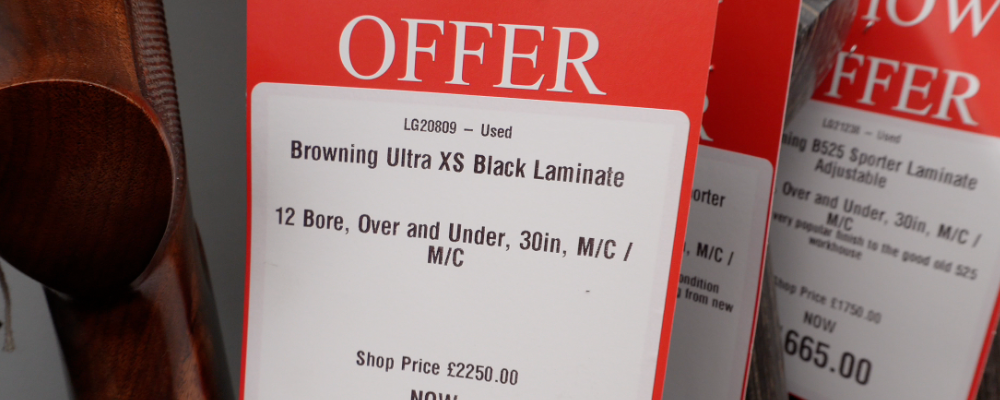
Set an ageing point that triggers a review, perhaps after 60, 90 or 120 days depending on the category. It does not have to mean an automatic discount. Instead, check whether the item needs fresh promotion, a different sales angle, a bundle or a lower price.
This turns discounting into a stock-management decision rather than a reaction to a quiet week.
Protect your margin before choosing the offer
Before advertising any reduction, work out the lowest price you can accept while still making the sale worthwhile. Include payment fees, advertising costs, staff time and anything being added to the deal. A discount that produces turnover but little or no profit may still make sense for badly aged stock, but that should be a conscious decision.
It can help to use stages rather than jumping straight to the largest reduction:
Improve the advert, photographs and placement.
Add value through a relevant bundle or service.
Test a modest, time-limited reduction.
Use a stronger clearance price only when releasing the cash matters more than protecting the original margin.
This gives good stock more than one route to a sale and keeps your biggest discounts for products that genuinely need them.
Make the discount easy to understand
A customer should be able to see what is on offer and why it is worth acting now. State the product, saving or added value, end date and any important conditions. If it is ex-display, used or a previous model, make that clear as well.
The wording should also match the product. “Final clearance” may be right for discontinued accessories, but it can make a premium gun feel unwanted. For higher-value stock, a straightforward seasonal price or package often protects the product’s positioning better.
Discount with a purpose
The weeks after the Game Fair can be a good time to turn excess stock into cash and capture demand ahead of the Glorious Twelfth. However, a busy promotional period is not a reason to reduce everything.
The best discounts solve a specific problem. They clear stock that is genuinely holding the business back, give customers a timely reason to buy and still make commercial sense once every cost is considered.
Before changing the price, make sure the right buyers have had a proper opportunity to see the product. Sometimes the stock does not need to be cheaper. It just needs to be put in front of more people who are already looking for it.
Gunstar helps gun shops put their stock in front of an established audience of shooting enthusiasts across the UK. To find out how Gunstar PRO Business could support your stock advertising, learn more about PRO Business.